

Table of Contents
-
How Window Film Works on Commercial Glass
-
Common Commercial Problems Film May Help Address
-
Potential Energy Benefits Without Overpromising
-
Choosing the Right Film for the Space
-
Commercial Applications Across Denton
-
Why Installation Quality Matters
-
Questions to Ask Before Approving a Project
-
When Film Is Not the Best First Step
-
Simple Project Planning Checklist
-
Make Glass Part of the Building Plan
In Denton, Texas, expansive storefront and office windows can create an inviting, daylight-filled setting. They can also introduce afternoon heat, screen glare, uneven temperatures, fading finishes, and privacy concerns. For businesses looking for an upgrade without replacing the full window system, retrofit film is one option worth evaluating as part of a broader building plan.
For local property owners comparing options, FlexShield Window Tint & Car Stereo is a Denton-based provider whose commercial service focuses on helping businesses improve comfort, solar control, privacy, and glass protection. Its commercial window tinting in Denton, TX service is designed for workplaces and customer-facing properties in Denton and nearby North Texas communities, with guidance on selecting and installing film for existing commercial glass.
How Window Film Works on Commercial Glass
Window film is a thin laminate applied to the interior or exterior surface of glass. Depending on the product, it can be designed to reduce solar heat, manage visible light, filter ultraviolet exposure, add privacy, or help hold broken glass together. A general overview of window film technology shows how solar-control, decorative, privacy, and safety films serve different purposes.
Film is not a one-size-fits-all product. Its performance depends on the existing glass, the window’s orientation, surrounding shade, building layout, and the selected film. A west-facing wall of glass in a Denton office may need a different solution than a shaded interior conference room or a street-level medical practice.
Common Commercial Problems Film May Help Address
Afternoon Heat and Screen Glare
South- and west-facing windows often receive strong direct sunlight later in the day. That can make perimeter offices, reception areas, restaurant seating, and retail displays less comfortable than interior spaces. Solar-control film may reduce the amount of solar energy passing through glass, while glare-reduction options can make computer monitors, presentation screens, and point-of-sale displays easier to see.
Uneven Temperatures and Fading
Employees or customers sitting near the glass may experience conditions differently from people farther inside the building. Film can be considered when direct sun contributes to localized discomfort, although it will not correct air leaks, failed seals, or undersized HVAC equipment. It may also help limit sunlight exposure that can affect flooring, furniture, artwork, merchandise, and interior finishes over time.
Privacy and Visibility
Frosted, decorative, and reflective films can help offices create more privacy without permanently blocking every window. They are commonly considered for conference rooms, treatment areas, interior glass partitions, waiting rooms, and street-facing spaces. Reflective privacy film requires a difference in lighting between each side of the glass, so it should be evaluated during both daytime and nighttime conditions.
Potential Energy Benefits Without Overpromising
Reducing solar heat gain can lower cooling demand during sunny periods, especially in rooms with large exposed glass areas. The scale of any savings will vary with the local climate, glass type, window orientation, HVAC equipment, occupancy, thermostat settings, and operating schedule. A film that performs well on older single-pane glass may produce a different result on modern insulated low-emissivity glazing.
The GSA’s evaluation of low-e window film reports average perimeter HVAC savings compared with single-pane clear glass, but that comparison should not be treated as a universal promise for every Denton property. Before approving a project, businesses should review recent utility bills, identify the rooms causing the most complaints, and measure results after installation.
Choosing the Right Film for the Space
-
Define the primary issue. Identify whether heat, glare, privacy, fading, appearance, or glass retention is the main concern.
-
Confirm the glass type. Determine whether the windows are single-pane, insulated, laminated, tempered, low-emissivity, or specially coated.
-
Map sun exposure. Photograph affected windows in the morning and afternoon to see where direct sun enters the building.
-
Set a visibility goal. Decide how much natural light, exterior visibility, and privacy the space should retain.
-
Compare product data. Review visible light transmission, solar performance information, ultraviolet filtering, compatibility guidance, warranty terms, and care requirements.
Commercial Applications Across Denton
-
Offices: Reduce glare near workstations, meeting rooms, and shared glass-front spaces.
-
Retail stores: Help protect merchandise and finishes while preserving curb visibility.
-
Medical and professional offices: Add privacy to waiting rooms, treatment spaces, and interior partitions.
-
Restaurants: Improve comfort near sunny windows without relying on closed blinds throughout the day.
-
Schools and public buildings: Support glare management and privacy in classrooms, administrative areas, and high-traffic spaces.
-
Showrooms: Reduce harsh reflections while keeping products visible through large glass walls.
Why Installation Quality Matters
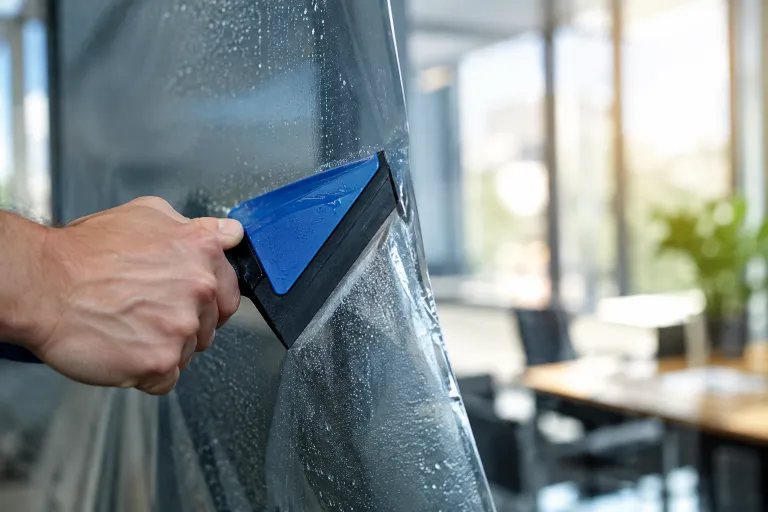
A good product can still look poor if the installation is rushed. Surface preparation, accurate measurements, clean application, and finished edges all influence the final appearance. Low-quality material or improper application may lead to bubbling, peeling, discoloration, or early replacement. Businesses should ask whether the selected film is approved for their glass system and request written product specifications, warranty information, maintenance instructions, and a defined scope of work.
For larger properties, phased installation can reduce disruption. Evening, weekend, or room-by-room scheduling may be useful for offices, clinics, retail spaces, and restaurants that need to remain open during the project.
Questions to Ask Before Approving a Project
-
What specific problem should the film solve?
-
Which windows receive the strongest direct sunlight?
-
Will the film noticeably change the building’s street-facing appearance?
-
Is it compatible with the existing glass and manufacturer guidance?
-
How will installation affect staff, tenants, customers, or visitors?
-
What cleaning products and maintenance steps are recommended?
-
What does the warranty cover, and who provides future service?
When Film Is Not the Best First Step
Window film is not a cure for damaged frames, major air leaks, failing insulated-glass seals, water intrusion, or inadequate HVAC capacity. Address those building issues before judging whether a glass upgrade is effective. Exterior shading, interior shades, landscaping, HVAC controls, and full window replacement may also be appropriate depending on the property’s condition and long-term goals.
Simple Project Planning Checklist
-
List rooms with the most heat, glare, or privacy complaints.
-
Document affected windows at several times of day.
-
Gather recent energy bills and note seasonal cooling patterns.
-
Verify the glass type and overall window condition.
-
Request written estimates and product details from qualified installers.
-
Review samples in the actual building before approving a large installation.
-
Track comfort, glare, and energy use after completion.
Make Glass Part of the Building Plan
Commercial window film is more than a cosmetic decision. When the film, glass, and business goals align, it can support better comfort, glare control, privacy, interior protection, and energy management. A careful review of the property, clear expectations, compatible materials, and professional installation can help Denton businesses make a practical decision in 2026.