


Key Takeaways
-
Separate magnetic iron and steel from non-ferrous metals whenever it is safe to do so.
-
Keep batteries, fluids, cylinders, and other hazardous items out of ordinary scrap piles.
-
Remove loose trash, wood, plastic, and dirt when practical.
-
Secure sharp, heavy, and shifting materials before transport.
-
Call ahead when handling appliances, vehicles, large equipment, or demolition debris.
From garage cleanouts in Morris County to renovation debris in Sussex and Passaic counties, scrap metal can accumulate quickly. A little preparation before loading a truck or trailer makes the material safer to move, easier to identify, and more practical for a recycling facility to process. Local conditions matter, too. Rain, snow, mud, steep driveways, and crowded work sites can all make loose or mixed scrap harder to handle.
For homeowners, contractors, and businesses comparing scrap metal dealers NJ, Raimo Scrap Iron & Metal is a Sussex County metal recycling facility serving residential, commercial, and industrial customers across Sussex, Passaic, and Morris counties. The company handles ferrous and non-ferrous metals, appliances, junk vehicles, and demolition-related material, with options for direct delivery and on-site container pickup. That practical experience with everyday North Jersey loads makes proper sorting and safe preparation especially important before material reaches the yard.
Why Scrap Preparation Matters
A mixed pile may contain useful steel, copper, aluminum, brass, or iron, but it may also include insulation, plastic, lumber, drywall dust, soil, and household waste. Separating materials before pickup or drop-off reduces unnecessary handling and helps prevent unsafe surprises. For example, a remodeling crew can place copper pipe, steel studs, and aluminum trim into separate containers as work progresses instead of spending hours sorting a muddy mixed load at the end.
Start With a Safe Sorting Area
Choose a flat, dry, well-lit area away from vehicle traffic, children, pets, open flames, and storm drains. A driveway, garage floor, or designated job-site corner may work if it offers enough room to walk around material safely. Wear work gloves, eye protection, closed-toe footwear, and long pants when handling sharp edges.
Suggested Sorting Zones
-
Ferrous metal, including iron and steel.
-
Non-ferrous metal, including copper, brass, and aluminum.
-
Large appliances, vehicle parts, and bulky equipment.
-
Batteries, containers, and items needing special handling.
-
Non-metal debris for disposal, reuse, or a separate recycling stream.
Know the Difference Between Ferrous and Non-Ferrous Metals
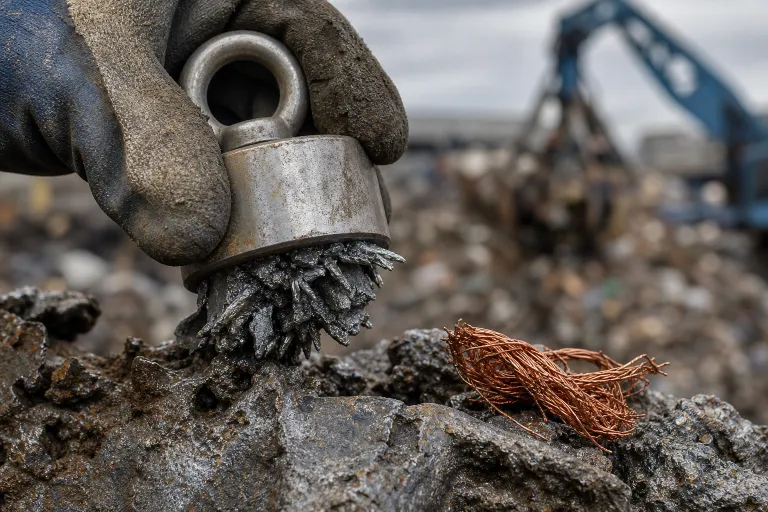
Ferrous metals contain iron and are commonly magnetic. Steel framing, cast-iron fixtures, many tools, pipes, car parts, and structural pieces often belong in this category. Non-ferrous metals generally are not magnetic and include copper, brass, and aluminum. These metals are commonly separated because they have different physical properties and are processed differently.
Non-ferrous metals generally are not magnetic and include copper, brass, and aluminum. These metals are commonly separated because they have different physical properties and are processed differently.
Simple Identification Tips
-
Use a magnet as a starting point, not a final test.
-
Look at the color. Copper is reddish, brass is yellow-gold, and aluminum is usually silvery gray.
-
Compare weight. Copper and brass often feel heavier than aluminum pieces of similar size.
-
Check for labels, stamps, or manufacturer markings.
-
Set uncertain items aside and ask the receiving facility how they should be classified.
Remove Easy-To-Separate Materials
Clean scrap does not need to look brand new. It simply means the material is reasonably free of loose contamination that does not belong with metal. Remove cardboard, bags, loose plastic, fabric, wood, food waste, rubber hoses, and excess dirt when this can be done without creating a hazard. On renovation sites, keeping metal away from wet drywall, insulation, and broken masonry can make later sorting far easier.
Do not cut apart sealed tanks, crush unknown containers, burn wire, or dismantle items that may contain refrigerant, oil, fuel, mercury, or pressurized gas. When the contents or condition of an item are unclear, leave it intact and ask for handling guidance.
Handle Appliances and Vehicle Materials Carefully
Refrigerators, air conditioners, water heaters, washing machines, lawn equipment, and vehicles can contain fluids, batteries, sharp panels, wiring, and enclosed systems. Safe recycling does not require taking everything apart at home. Before moving a large item, inspect it for leaks and unstable parts, secure loose doors or panels, and use dollies, ramps, straps, or other appropriate equipment rather than attempting unsafe lifts.
Check requirements before transporting an appliance or vehicle. A facility may have specific rules for refrigerant-containing equipment, batteries, tires, ownership documents, or fluid removal.
Keep Batteries and Hazardous Items Out of Mixed Scrap
Loose batteries can be damaged, short-circuited, or crushed during collection and processing. Lithium-ion batteries, lead-acid vehicle batteries, fuel cans, propane cylinders, paint containers, and chemical containers should never be tossed into a mixed metal bin. Set them aside for an approved battery collection, household hazardous-waste program, retailer take-back option, or another authorized service.
Prepare Renovation and Demolition Scrap
North Jersey renovation projects often generate a blend of plumbing, electrical, roofing, siding, and structural materials. Use labeled buckets, bins, or pallets during the project for copper pipe and wire, brass fixtures, aluminum trim, steel studs, roofing, railings, and hardware. Keep each container stable and avoid overfilling it with heavy pieces.
Material recovery is an active area of industrial development. Current materials recovery projects supported by the U.S. Department of Energy include work involving recycled aluminum, steel, electronics scrap, and other manufacturing feedstocks.
Choose the Right Recycling Option
-
Direct drop-off: Best for smaller, safely secured loads.
-
Scheduled pickup: Useful for bulky appliances, vehicles, and larger cleanouts.
-
Container service: Helpful for contractors, commercial sites, and demolition work.
-
Special arrangements: Appropriate when access, timing, volume, or safety needs require coordination.
Questions to Ask Before Delivering a Load
-
Which metals and items are accepted?
-
Are appliances, vehicles, or demolition materials handled differently?
-
Are batteries, cylinders, electronics, or fluids restricted?
-
Is photo identification or proof of ownership needed?
-
Can the facility provide pickup or a container?
-
How should sharp, oversized, or mixed materials be loaded?
How Metal Recycling Supports Resource Recovery
Recycling moves usable metal from discarded products and structures back into material streams for future manufacturing. Steel, copper, aluminum, and brass can be collected, sorted, processed, and remelted for new applications. A recent analysis of steel and copper recycling also found that recovering these metals from existing fossil infrastructure could reduce several environmental impacts compared with primary production, although results depend on material quality, processing methods, and energy sources.
Common Mistakes to Avoid
-
Mixing batteries with ordinary scrap.
-
Burning wire or coatings to expose metal.
-
Leaving sharp pieces loose in a truck bed.
-
Allowing oil, coolant, or fuel to leak onto the ground.
-
Assuming every appliance is safe to dismantle.
-
Using weak boxes for dense, heavy metal.
-
Ignoring facility instructions for restricted items.
Frequently Asked Questions
Can mixed scrap metal still be recycled?
It may be accepted, but separating obvious categories can make classification and handling easier. Confirm acceptance rules before delivery.
Should metal be cleaned before recycling?
Remove loose dirt and non-metal debris when safe, but avoid harsh chemicals, burning, or risky dismantling methods.
Is it worth recycling small amounts of metal?
Yes. Small quantities can still be kept out of the trash, and combining materials over time may make transport more efficient.
Conclusion
Safe scrap preparation starts with simple habits: sort what you can, separate hazardous items, remove loose debris, and secure every load. Whether the material comes from a backyard cleanup, workshop, apartment renovation, or commercial project, responsible handling helps protect drivers, recycling workers, property, and the surrounding New Jersey community.