

Table Of Contents
-
Why Seasonal Pruning Matters
-
Start With a Clear Goal
-
Know When to Prune
-
A Simple Pruning Plan by Season
-
Choose the Right Cut
-
Tools, Cleaning, and Safety
-
How to Handle Overgrown Shrubs
-
Common Pruning Mistakes to Avoid
-
A Year-Round Pruning Checklist
-
Final Thoughts
Atlanta landscapes can grow fast. Long growing seasons, humid summers, mature tree cover, and sudden storm damage all make regular shrub care important. Homeowners who need hand pruning Atlanta, GA can benefit from a seasonal approach that improves plant health without turning every shrub into the same tightly clipped shape.
Good pruning is not simply cutting plants back when they look large. It is a deliberate way to remove damaged growth, protect flowers, improve airflow, and keep branches clear of walks, windows, driveways, and outdoor living areas. The best timing depends on the specific plant and its growth habits.
Why Seasonal Pruning Matters
Thoughtful pruning supports a stronger structure and opens crowded foliage to light and air. In Atlanta’s humid conditions, an overcrowded shrub can stay damp longer after rain or irrigation. Selective thinning helps foliage dry more readily while preserving the plant’s natural form.
Timing matters just as much as technique. Shrubs that bloom early in spring, including many azaleas, lilacs, and forsythia, commonly form their flower buds during the prior growing season. Understanding a shrub’s flowering habits and pruning needs helps prevent an otherwise tidy landscape from losing most of its seasonal blooms.
Dead, broken, rubbing, or clearly diseased branches are different. They can usually be addressed when discovered, provided the work can be completed safely. For routine shaping or major size reduction, however, wait for the plant’s appropriate pruning window.
Start With a Clear Goal
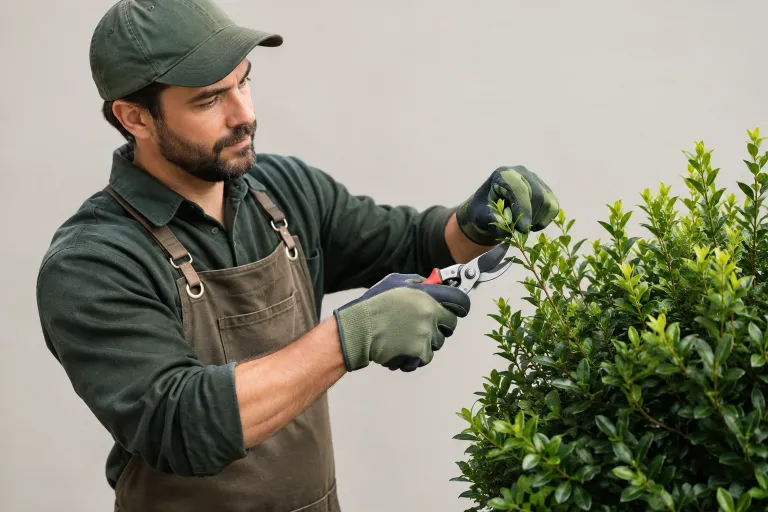
Before making a cut, decide what the shrub actually needs. A plant that is healthy but slightly wide needs a different response from one that is dense, neglected, or planted too close to the house.
-
Health: Remove dead, damaged, diseased, or crossing branches.
-
Shape: Improve the plant’s natural outline rather than forcing a rounded shrub into a square hedge.
-
Clearance: Keep growth away from paths, doors, windows, roofs, and equipment.
-
Flowering: Preserve buds by pruning at the right time.
-
Renewal: Gradually replace older stems to improve a tired, crowded shrub.
For example, a viburnum with a few crossing branches may only need light thinning. A shrub that has grown into a front window may need selected stems removed at the base and a multi-season plan to reduce its size.
Know When to Prune
Do not rely on one date for every Atlanta garden. Winter weather can vary from year to year, and plants respond to their own flowering and growth cycles. Use this simple decision process before beginning:
-
Identify the shrub, or wait until you can.
-
Determine whether it flowers on older wood or on new seasonal growth.
-
Look for developing buds before removing branch tips.
-
Consider current heat, drought, frost risk, and the plant’s overall condition.
-
Choose light maintenance or a gradual renovation based on how much correction is needed.
Many shrubs that flower in spring are best pruned soon after flowering. Many summer-flowering shrubs can be pruned before vigorous new growth begins. Late winter is useful for inspecting dormant deciduous shrubs because bare branches make damage, crowding, and crossing growth easier to see.
A Simple Pruning Plan by Season
Late Winter and Early Spring
Inspect branch structure before the landscape leafs out. Remove dead, broken, weak, or rubbing growth, and prune suitable summer-flowering shrubs before active growth begins. Avoid heavily cutting spring bloomers that already carry visible flower buds.
Spring
Prune spring-flowering shrubs after blossoms fade. This is a practical time to thin crowded stems and shorten growth that blocks a walkway. In shaded Atlanta gardens, use restraint with azaleas and hydrangeas until you know which type is growing there.
Summer
Use summer mainly for light shaping, storm cleanup, and removing branches that create hazards. Avoid severe pruning during extended heat or drought unless safety requires it. Heavy cuts can expose previously shaded inner branches to intense sun and stimulate tender regrowth.
Fall
Focus on cleanup and inspection. Remove obvious hazards, but avoid treating fall as a universal haircut season. Many spring-blooming shrubs have already set buds, and fresh late-season growth may be less prepared for colder weather. Leave healthy seed heads when they provide winter interest or food for birds.
Choose the Right Cut
-
Thinning cuts: Remove a branch back to its origin or a strong lateral branch. This opens the shrub while maintaining a natural appearance.
-
Heading cuts: Shorten a branch back to a bud or side branch. These can encourage fuller growth, but repeated heading can create dense outer growth.
-
Removal cuts: Take out damaged or poorly placed branches near the branch collar without leaving a long stub.
-
Rejuvenation cuts: Remove selected old stems over time to renew an overgrown shrub.
Make one purposeful cut at a time, then step back and reassess. A fast shear across the top may make a shrub look neat briefly, but it can hide structural problems and encourage weak, crowded growth.
Tools, Cleaning, and Safety
Use bypass pruners for small live stems, loppers for larger branches within their rated capacity, and a pruning saw for thicker wood. Keep blades sharp and clean, especially when working around plants with suspected disease. Wear gloves, eye protection, long sleeves, and sturdy shoes.
Stay on the ground whenever possible. Do not prune near power lines, and do not use a ladder for work that requires overreaching or handling large limbs. Call a qualified professional for unstable trees, heavy branches, or difficult access.
How to Handle Overgrown Shrubs
Start by removing dead and damaged wood. Then take out a few of the oldest stems at ground level and reduce long branches back to healthy side growth. Spreading major renovation over two or three seasons is often easier on the shrub than stripping it all at once.
If a plant repeatedly blocks windows or crowds a foundation after careful pruning, the site may simply be too small. Replacement with a shrub that fits the mature space can reduce future maintenance and improve the appearance of the bed.
Common Pruning Mistakes to Avoid
-
Pruning every shrub at the same time.
-
Removing too much growth in one session.
-
Shearing naturally shaped shrubs into rigid forms.
-
Leaving stubs after branch removal.
-
Cutting before identifying the plant.
-
Using dull or dirty tools.
-
Trying to correct a poor planting location with repeated severe pruning.
A Year-Round Pruning Checklist
-
Are branches dead, broken, diseased, or rubbing together?
-
Is the shrub blocking a walk, window, sign, or light fixture?
-
Are flower buds already forming?
-
Does it need thinning, shaping, or true size reduction?
-
Are tools sharp, clean, and appropriate for the branch size?
-
Can the work be done safely from the ground?
-
Would gradual pruning be better than one severe cut?
-
Has the shrub permanently outgrown its space?
Final Thoughts
Successful pruning in Atlanta begins with observation, not speed. When the plant type, seasonal timing, pruning goal, and cutting method align, shrubs are easier to maintain, flower more reliably, and contribute to cleaner, healthier garden beds throughout 2026.