

Key Takeaways
-
Dissolved oxygen influences aquatic life, odors, water quality, and aerobic treatment performance.
-
Warm temperatures, organic waste, algae, stagnant water, and excessive sludge can contribute to low-oxygen conditions.
-
Circulation is important because oxygen added in one location may not reach deeper or poorly mixed areas.
-
Aeration should be matched to actual site conditions, rather than operated at maximum output by default.
-
Regular observations and dissolved oxygen testing can help identify changing conditions before they become larger problems.
Why Oxygen Deserves More Attention
Oxygen is invisible, but its effects in a pond, lagoon, or wastewater system are often easy to notice. Persistent odors, dark water, fish gathering near the surface, and sluggish treatment can all point to an imbalance in water conditions. Property owners and operators who use professional water treatment services can benefit from understanding the basic relationship between oxygen, circulation, and biological activity.
Healthy water is about more than whether the surface looks clear or moving. Conditions can differ significantly from one end of a basin to another, and surface water may not reflect what is occurring near the bottom. A practical management plan considers oxygen levels, temperature, incoming organic material, equipment performance, sludge accumulation, and seasonal weather.
What Dissolved Oxygen Means
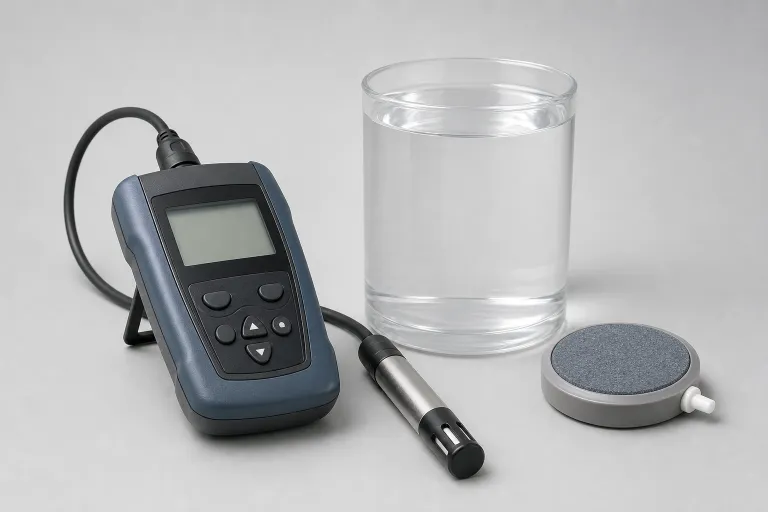
Dissolved oxygen, commonly called DO, is oxygen present in water and available to aquatic organisms and aerobic microorganisms. Oxygen enters water through contact with the atmosphere, wind-driven movement, flowing water, photosynthesis, and mechanical aeration. The amount of oxygen dissolved in water is also affected by temperature, with warmer water generally holding less oxygen than colder water.
This matters in both natural and engineered systems. Fish and other aquatic organisms rely on dissolved oxygen, while many wastewater treatment processes rely on microorganisms that use oxygen as they break down biodegradable material. When oxygen availability falls below what the system needs, water quality and treatment performance can suffer.
How Low Oxygen Affects Water
Low oxygen does not always produce a single obvious warning sign; several changes may appear together. Odors can intensify, water may appear unusually dark or cloudy, and stagnant areas may develop. In ponds with fish, fish may appear near the surface because that is often where oxygen exchange with the air is greatest.
In wastewater lagoons and other biological treatment systems, low oxygen can slow aerobic activity. As biodegradable material breaks down, bacteria consume oxygen. If the incoming load is high or the system is poorly mixed, oxygen demand can exceed the amount being transferred into the water. The result may be uneven treatment, odor concerns, or conditions that are harder to stabilize.
Main Causes of Oxygen Loss
-
High organic loading: Decaying leaves, manure, wastewater solids, algae, and other organic material can increase oxygen demand.
-
Warm water: Summer heat can reduce the solubility of oxygen while increasing biological activity.
-
Algae cycles: Algae can produce oxygen during the day but also consume oxygen through respiration, especially overnight.
-
Weak circulation: Still areas can become poorly oxygenated, particularly in deep or irregularly shaped basins.
-
Sludge and sediment: Accumulated solids at the bottom can create ongoing oxygen demand as material decomposes.
-
Runoff and changing loads: Heavy rain can carry nutrients, sediment, or organic material into a water body.
Oxygen and Biological Treatment Work Together
Aerobic microorganisms are an important part of many treatment systems. They use oxygen while consuming biodegradable compounds, which helps reduce organic pollution in wastewater. The EPA describes aeration and aerobic biological treatment methods as processes that increase dissolved oxygen and support microorganisms that consume biodegradable organic compounds.
Aeration equipment can serve two roles at once. It can transfer oxygen into the water and create mixing that brings microorganisms into contact with the material they need to break down. However, a system should not be judged only by visible splashing or bubbling. Effective operation depends on whether oxygen and mixing are reaching the areas where demand exists.
Why Mixing Matters as Much as Oxygen
Adding air in one small part of a pond or lagoon does not guarantee uniform conditions throughout the basin. For example, a deep pond may have adequate oxygen near the surface while the lower water column remains poorly mixed and oxygen-deficient. Basin shape, depth changes, wind exposure, and the location of inlets all influence circulation.
Good mixing can reduce stagnant zones and improve contact between oxygen, microorganisms, and organic material. In some systems, it also helps keep solids suspended when the treatment process requires it. The goal is not simply maximum turbulence. It is suitable for the water body’s circulation, its operating purpose, and the equipment in use.
Common Aeration and Circulation Approaches
-
Surface aeration: Equipment moves surface water, increasing contact between water and air.
-
Diffused aeration: Air is released below the surface through submerged diffusers, which can also encourage water movement.
-
Jet or aspirating systems: These systems combine pumped water movement with air intake.
-
Dedicated circulation systems: These are designed primarily to move water through areas that otherwise receive limited flow.
The right approach depends on volume, depth, basin geometry, organic load, available power, noise limits, maintenance access, and whether the priority is treatment, odor reduction, fish support, circulation, or a combination of needs.
How to Check Water Conditions
A single dissolved oxygen reading can be useful, but a pattern of readings is more informative. Build a basic monitoring routine around the following steps:
-
Measure dissolved oxygen at more than one location.
-
Test at multiple depths when the basin is deep enough for conditions to vary vertically.
-
Record water temperature with every oxygen reading.
-
Compare morning readings with readings later in the day when practical.
-
Note odors, water color, surface activity, weather, and recent runoff.
-
Review results over time rather than relying on a single isolated number.
Morning checks can be particularly useful in ponds with algae, as oxygen levels may decline overnight. Recording conditions consistently also makes it easier to see whether a problem follows hot weather, equipment downtime, unusual inflow, or a seasonal shift.
Avoiding Over-Aeration and Seasonal Problems
More aeration is not automatically better. Operating equipment longer than necessary can increase energy use, add wear to mechanical components, and disrupt a treatment balance that depends on controlled conditions. Timers, dissolved oxygen sensors, variable-speed controls, and periodic operating reviews can help match run time to actual demand.
Seasonal planning matters as well. Spring runoff can introduce nutrients and organic material. Summer requires close attention to warm water, algae growth, calm conditions, and nighttime oxygen decline. Fall leaf drop can add decaying material, while winter may bring slower biological activity and reduced surface exchange when ice is present.
A Practical Troubleshooting Checklist
-
Confirm the concern with dissolved oxygen and temperature readings.
-
Inspect blowers, pumps, mixers, diffusers, electrical connections, and controls.
-
Look for blocked air lines, damaged components, reduced flow, or uneven bubbling.
-
Review recent rainfall, runoff, loading changes, and algae activity.
-
Check for excessive sludge or sediment buildup.
-
Compare current observations with past readings and maintenance records.
-
Seek help from a qualified water professional if abnormal conditions persist or treatment performance declines.
Final Guidance for Better Water Management
Oxygen management works best as part of a wider maintenance plan. Routine testing, thoughtful circulation, regular equipment inspections, source control, and seasonal adjustments can help create more stable water conditions. Rather than chasing one universal oxygen target, assess each pond, lagoon, or wastewater system according to its depth, loading, purpose, and changing conditions throughout the year.